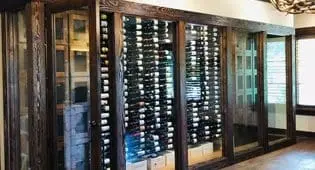

When a Wine Cellar Leak Isn’t a Roof Leak: A Homeowner’s Story of Finding the Real Problem?
A water stain on your wine cellar ceiling or a damp patch on the wall can make you think there’s a leak somewhere above. It’s the obvious answer most of the time.
The WT&F Experience thought they were dealing with recurring moisture in their wine room for 3 summers. But the actual problem wasn’t a roof leak. It was condensation.
At Wine Cellars of Houston, we believe solving a wine cellar problem starts with understanding what’s happening behind the visible damage. Even when a wine collector hasn’t worked with us before, we’re happy to share our experience to help them. This is particularly important in rooms with custom wine racks, where moisture can affect finishes, walls, and the surrounding structure.
Three Summers of Chasing the Wrong Problem
The WT&F Experience had been dealing with recurring moisture for 3 summers. Each time it appeared, the problem was treated as a possible roof leak. Yet the moisture kept coming back.
Eventually, they reached out to us. Although we hadn’t designed or installed their wine cellar, we took some time to discuss what was happening and help them work through the possible causes.
Our conversation helped them identify condensation as the source of the trouble, rather than an apparent roof leak. They shared an update 6 months later, when they had finally repaired, repainted, and completely reassembled the wine room. Now, they could enjoy the space again without worrying about recurring moisture.
They also publicly thanked our team for taking the time to help, even though we weren’t involved in the original project.
The takeaway? Before repairing a roof or replacing cellar finishes, make sure you’ve identified where the moisture is actually coming from.
How to Recognize Wine Cellar Condensation Problems?

Condensation happens when warm, moisture-filled air meets a colder surface. When the surface temperature drops below the air’s dew point, water droplets form. In a commercial or home wine cellar, this can happen on walls, ceilings, glass panels, or metal fittings.
Here are a few signs worth checking:
- Moisture that returns in summer: If damp patches become more noticeable during warmer, humid months, investigate condensation before assuming there’s a roof leak.
- Water droplets on glass: A modern glass wine cellar in Houston can also reveal condensation through persistent fogging or droplets on the surface.
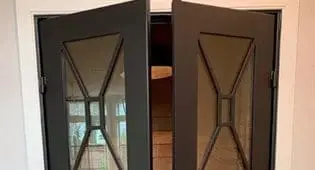
- Dampness around doors and frames: Poor seals or temperature differences around wine cellar glass doors can allow humid air to enter.
- Musty smells or peeling paint: These may indicate prolonged moisture exposure, particularly when accompanied by mold or damaged finishes.
A roof leak, on the other hand, may leave watermarks that worsen after rainfall or show moisture concentrated around roof penetrations. However, neither pattern proves the cause. Both possibilities need proper inspection.
Wine Cellar Moisture Control: What Should You Check?

When investigating wine cellar humidity issues, we recommend looking beyond the visible water damage.
- Check insulation and vapor barriers
Wine cellar insulation problems are common as condensation develops. A cellar needs properly installed insulation and vapor control to prevent warm, humid air from reaching cold surfaces.
Building Science Corporation’s technical guidance on wine cellars explains why cellar construction needs careful attention to moisture movement. - Inspect the cooling system
Wine cellar cooling system troubleshooting includes checking temperature consistency, airflow, drainage, and equipment performance. A standard household AC isn’t suitable for a dedicated cellar. - Look at doors and glass panels
A custom glass wine cellar or cabinet needs appropriate insulation and sealing. The enclosure must support stable conditions. - Monitor humidity and temperature
Don’t rely on how the room feels. Use a thermometer and hygrometer to track changes. The Australian Wine Research Institute explains how temperature fluctuations and humidity affect bottled wine.
For more practical guidance, explore our complete guide to wine storage and preservation.
When Should You Call a Wine Cellar Specialist?

If moisture keeps returning despite repairs, paint starts peeling, mold appears, or your cooling system struggles to maintain stable conditions, it’s time to get professional help.
Don’t simply repair a damp wall or assume a roof replacement will solve everything. A specialist can assess the cellar’s construction, insulation, cooling equipment, and moisture patterns together.
Our guide to common wine cellar design mistakes explains why getting these details right matters. You can also learn about other warning signs that your cellar needs repairs.
At Wine Cellars of Houston, we’re happy to share our expertise, whether we’re building your cellar or helping you understand an existing one!
Our goal isn’t simply to build a beautiful wine room. We want you to enjoy your collection without worrying about what’s happening behind the walls.

Rudy Ardon is the visionary Founder & CEO behind Wine Cellars of Houston. Since 1998, his master carpentry has designed the most luxurious custom wine cellars. From flawless cooling units to elite restorations, Rudy turns wine storage into high art.
Mail ID: rudy@winecellarsofhouston.com
Frequently Asked Questions
Rudy Ardon is the visionary Founder & CEO behind Wine Cellars of Houston. Since 1998, his master carpentry has designed the most luxurious custom wine cellars. From flawless cooling units to elite restorations, Rudy turns wine storage into high art.
Mail ID: rudy@winecellarsofhouston.com